

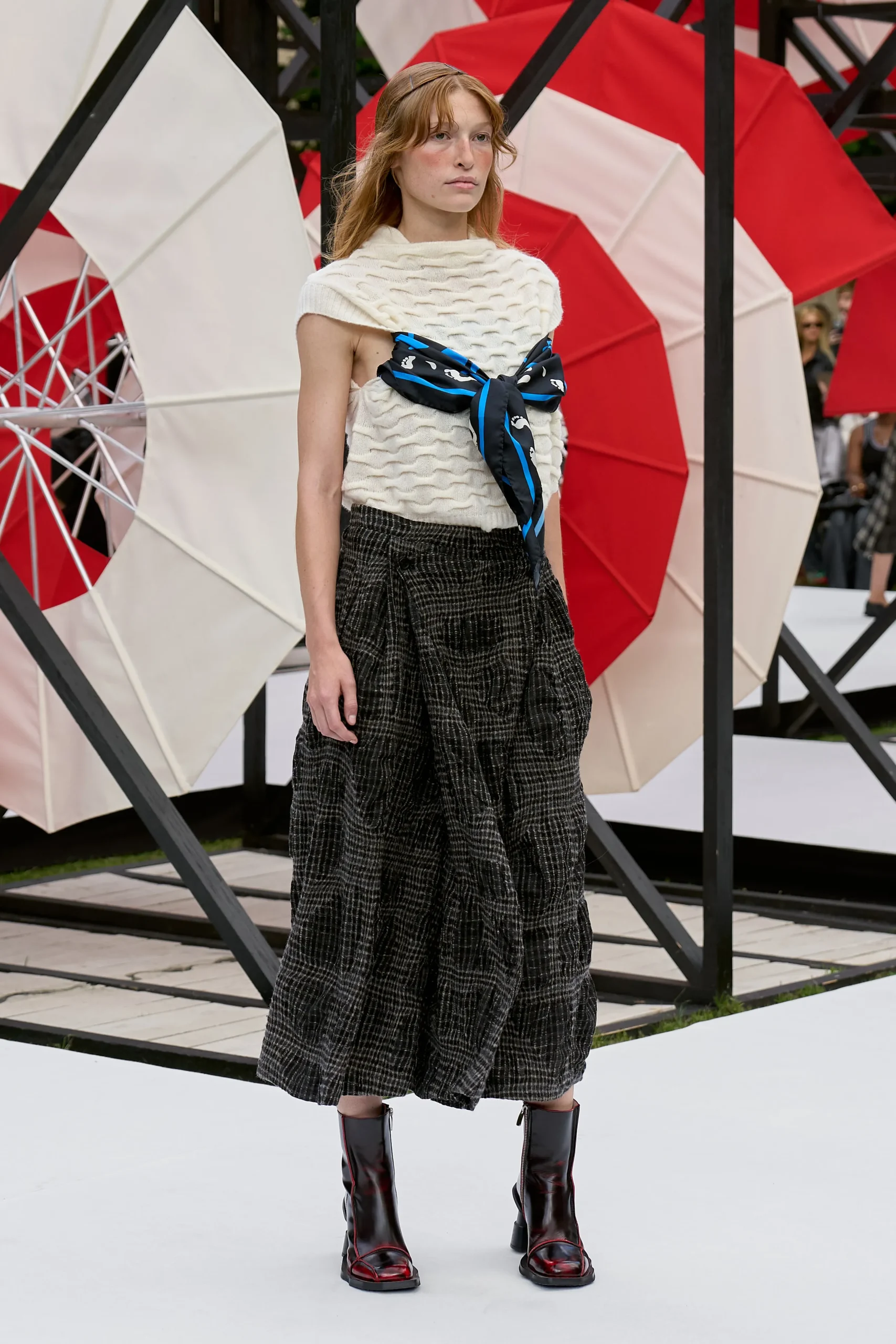
Copenhagen Fashion Week enters its 20th anniversary year with a Spring 2027 edition that reflects the Danish capital’s increasingly important role in the global fashion industry. Taking place from August 3 through August 7, the event brings more than 34 runway shows and presentations to Copenhagen, combining established Scandinavian fashion houses with emerging designers and international talent.
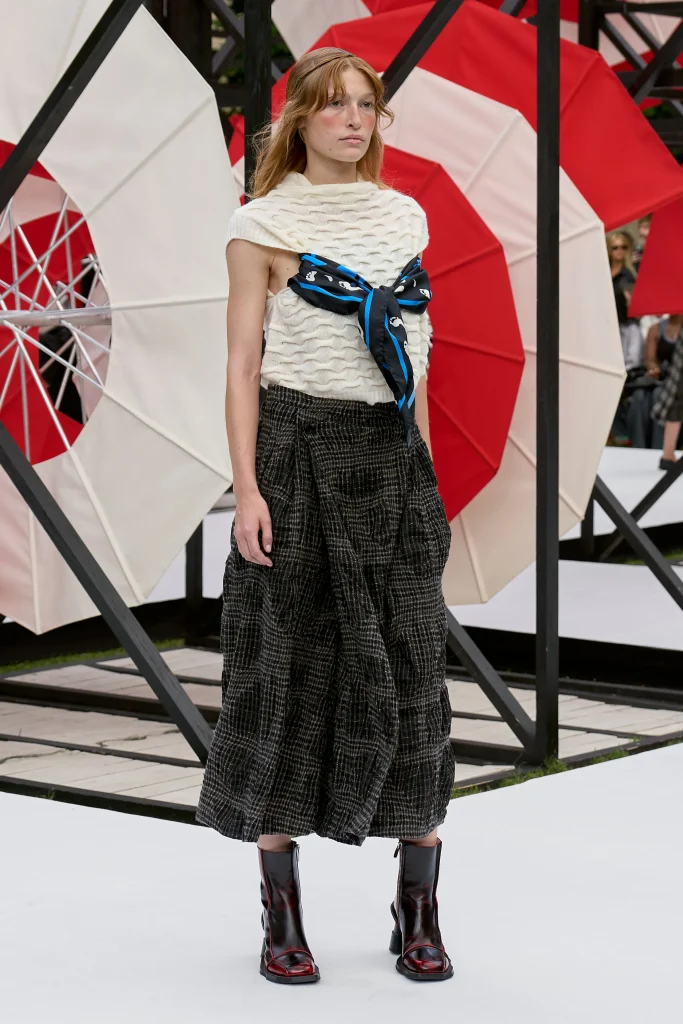
This season’s lineup includes familiar Copenhagen names such as Henrik Vibskov, Baum und Pferdgarten, and By Malene Birger. Adding an international dimension to the schedule, New York-based Collina Strada has been selected as the season’s International Guest, with Hillary Taymour set to present the label’s SS27 collection on August 6. The appearance marks the brand’s first Copenhagen Fashion Week presentation.
The program also introduces a number of emerging labels, including Stem, Taus, and Renè, while designers such as Anne Sofie Madsen and former CPHFW New Talent participant Nicklas Skovgaard return to the official calendar.
With such a diverse mix of established houses and rising talent, Copenhagen’s Spring 2027 season offers plenty of different perspectives on contemporary fashion. Here are five collections that stood out across this year’s schedule.
Collina Strada
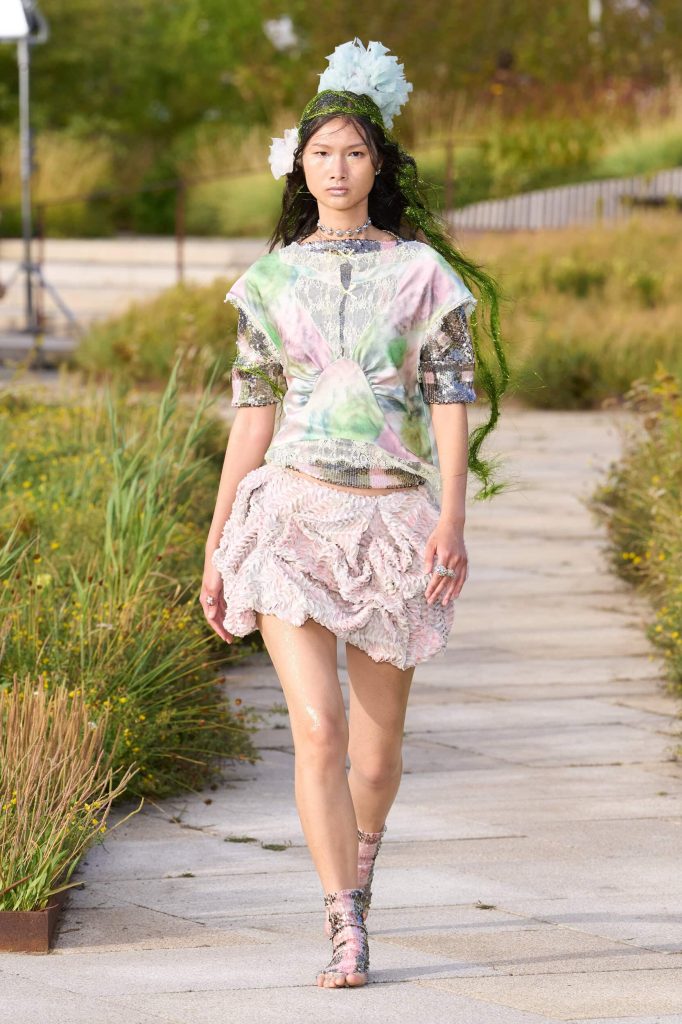
Collina Strada brought a distinctly New York perspective to Copenhagen as the season’s International Guest, presenting its SS27 collection in an atmospheric outdoor setting accompanied by live violinists.
Hillary Taymour’s designs maintained the label’s signature combination of fantasy, romance, experimentation, and irreverence. Oversized ruffles, metallic finishes, asymmetric silhouettes, and gathered fabrics created dramatic shapes that emphasized movement and volume.
Bridal-inspired elements appeared across several looks, introducing a softer and more romantic mood. Elizabethan references in the beauty styling added another layer of historical influence, creating an intriguing contrast with the collection’s contemporary construction.
Much of the collection’s character came from the way these opposing ideas were brought together. Delicate details appeared alongside unconventional proportions, while refined finishes were disrupted by playful and unexpected styling.
The result was theatrical, expressive, and unmistakably Collina Strada, making the label’s Copenhagen debut one of the more memorable moments of the season.
By Malene Birger
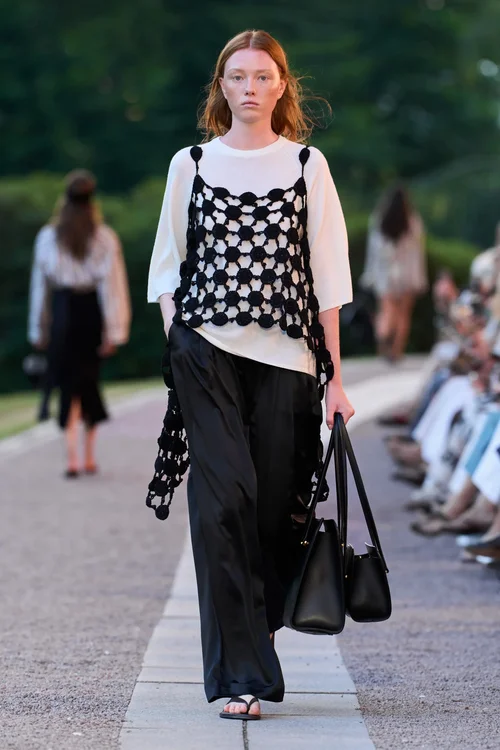
Spring 2027 marked an important return for By Malene Birger, which came back to the runway after a six-year absence. Creative director Emilie Martinsen-Kønigsfeld chose an especially personal location for the occasion, presenting the collection in the gardens of her parents’ home just outside Copenhagen.
The setting played an important role in the story behind the collection, reinforcing the idea of homecoming and reconnecting with the origins of the fashion house.
The presentation progressed through the different moods of a day. The opening looks focused on clean whites and understated neutrals before gradually introducing warmer golden tones and eventually deep black shades for evening.
Sun-inspired motifs and subtle decorative details reinforced this progression, while the soundtrack helped mirror the changing atmosphere of daylight.
The wardrobe itself was built around effortless sophistication. Relaxed tailoring, fluid dresses, softly draped pieces, and lightweight outerwear created a cohesive selection that felt refined without becoming overly formal.
References to the brand’s history were present but deliberately understated. Tassel details on outerwear, scarf-inspired backless tops, and reflective embroidery offered subtle reminders of the house’s previous work.
There was also a clear connection to 1990s fashion, particularly in the sheer evening dresses that recalled the understated glamour of the supermodel era. Their styling, however, kept the references feeling current rather than retro.
By Malene Birger ultimately found a successful balance between heritage and reinvention, revisiting familiar elements while translating them into a contemporary Scandinavian wardrobe.
Henrik Vibskov
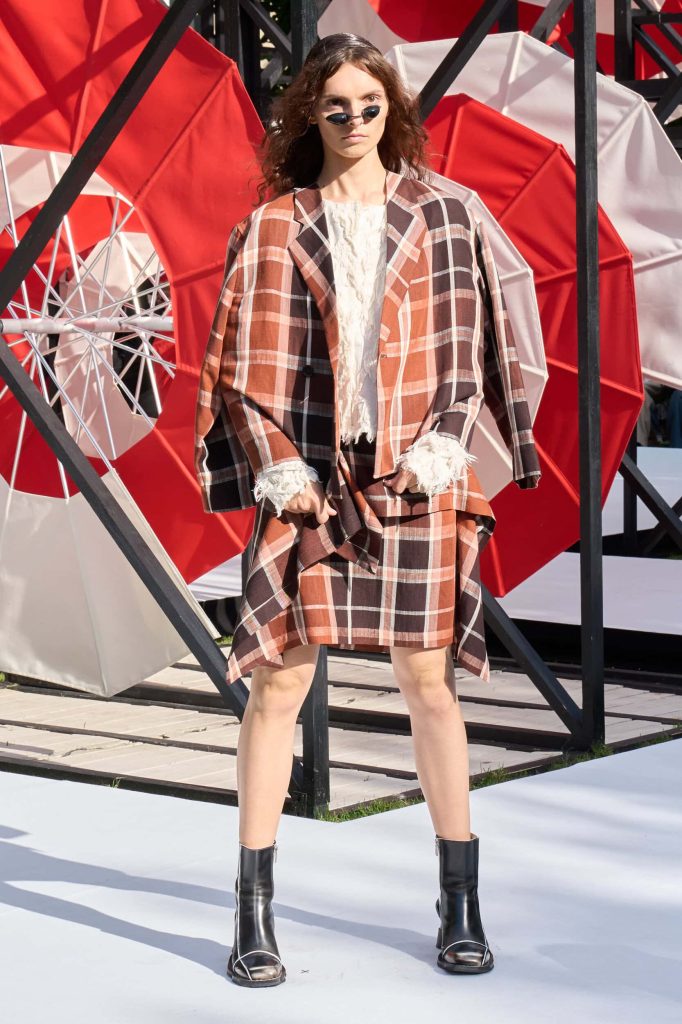
Henrik Vibskov continued his long-standing exploration of unconventional design for Spring 2027, using unusual proportions, sculptural silhouettes, contrasting textures, and inventive construction to create a collection with a distinctly artistic edge.
The styling played extensively with scale. Oversized garments were combined with closer-fitting pieces, producing contrasts in volume and creating silhouettes that constantly shifted between exaggerated and controlled.
Graphic details, unusual constructions, and playful accessories added further character, reinforcing the collection’s experimental mood.
Despite its conceptual qualities, the collection retained an underlying sense of practicality. Many individual garments could be separated from the runway styling and interpreted as part of a contemporary everyday wardrobe.
That combination of artistic experimentation and functionality remains central to Vibskov’s appeal. His designs challenge traditional approaches to proportion while still maintaining a connection to how clothing is actually worn.
For Spring 2027, the designer once again transformed Copenhagen’s creative energy into a collection that felt both unconventional and distinctly personal.
Baum und Pferdgarten
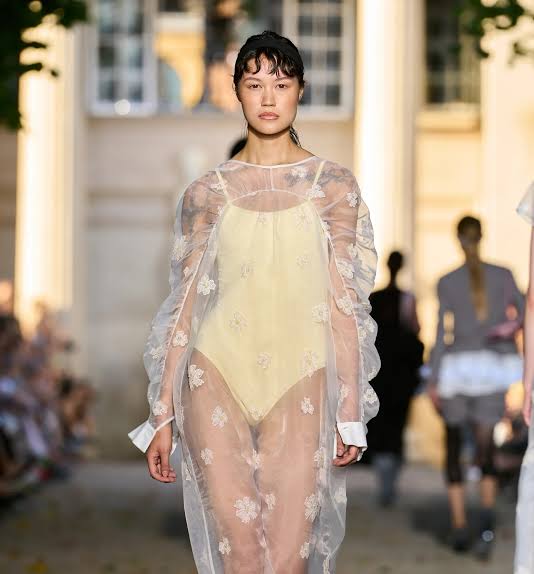
Baum und Pferdgarten explored modern femininity through a combination of structured tailoring, relaxed silhouettes, expressive prints, and playful styling.
The collection moved between sharply tailored trousers and jackets, flowing dresses, softer fabrics, and casual separates. Bold patterns and contrasting textures added visual energy, while unexpected combinations kept the looks feeling fresh.
Rather than presenting femininity as a single concept, the collection explored several different moods. Structured tailoring introduced confidence and definition, while softer silhouettes created a more relaxed and fluid impression.
Versatility was equally important. Many of the pieces appeared capable of transitioning easily between different settings, whether styled for everyday wear or elevated for a more polished occasion.
That ability to combine individuality with practicality remains one of the label’s defining qualities. For Spring 2027, Baum und Pferdgarten once again demonstrated that fashion can be playful and expressive while remaining accessible.
Stem
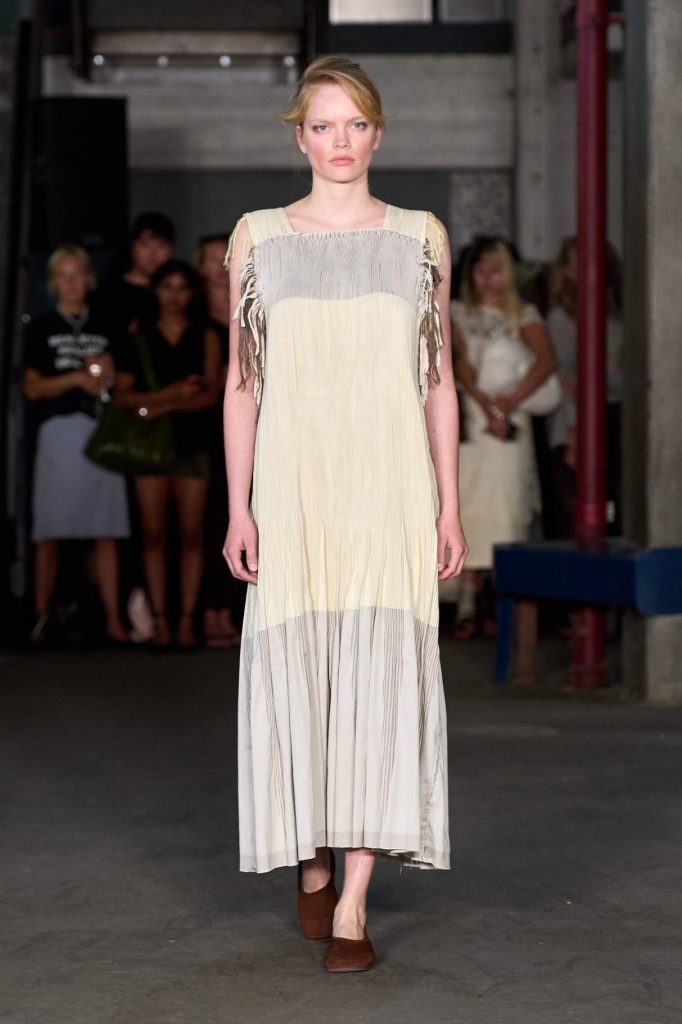
Emerging label Stem offered a more restrained perspective on Scandinavian fashion for Spring 2027, focusing on construction, proportion, fabric, and subtle details rather than overt decoration.
The collection relied on clean cuts and fluid shapes to establish its visual identity. At first, the garments appeared understated, but closer attention revealed unusual proportions, nuanced details, and carefully considered styling.
Stem’s approach reflects the changing nature of Nordic minimalism. For a younger generation of designers, minimalism is increasingly becoming a foundation for experimentation rather than a strict visual formula.
The collection balanced simplicity with subtle innovation, using shape and material to create interest without relying on excessive embellishment.
The overall result felt youthful, sophisticated, and quietly confident, suggesting that Stem could become an increasingly significant name within Copenhagen’s emerging design community.


